


By Water’s Edge Counseling · Reviewed by Whitney Owens, LPC · Savannah & Wilmington Island, GA · Last reviewed: March 2026
The Bottom Line: Younger children often benefit from play-based therapy that helps them express emotions and build coping skills. Adolescents typically engage in conversation-based therapy focused on identity development, relationships, and emotional regulation. Understanding these developmental differences helps parents choose the right kind of support for their child.
Key Takeaways
- Child counseling and adolescent counseling differ primarily because of developmental milestones, not just age.
- Younger children often benefit from play-based therapy that helps them express emotions safely.
- Adolescents typically engage in conversation-based therapy focused on identity, independence, and coping skills.
- Parents play an important role in supporting therapy progress, especially for younger children.
- Early support from a licensed therapist can help children and teens develop healthy emotional coping skills.
When parents first reach out to our team, the question is often simple but deeply important: Is what my child is experiencing normal for their age, or is it time to seek support? In many conversations with families at Waters Edge Counseling, this moment comes after weeks—or months—of trying to understand changes in behavior, mood, or relationships.
In therapy, age matters—but not in the way most people expect. The real difference between child counseling and adolescent counseling isn’t just a birthday. It’s the developmental milestones a young person is working through.
As children grow, their emotional world expands. The ways they communicate, regulate emotions, and relate to others change. Therapy evolves alongside those changes.
What Is the Difference Between Child Counseling and Adolescent Counseling?
Child counseling and adolescent counseling support different developmental needs, and the therapy approach changes as children grow.
Summary: Child counseling and adolescent counseling support different developmental needs. Younger children often benefit from play-based therapy that helps them express emotions and build coping skills. Adolescents typically engage in more structured talk therapy focused on identity development, relationships, independence, and managing more complex emotional challenges.
Child counseling and adolescent counseling both aim to support emotional wellbeing, but the approach looks very different depending on the child’s developmental stage. Families exploring support often begin by learning about child counseling services and how therapy evolves as children grow.
Younger children often communicate through behavior, imagination, and play, which is one reason the CDC notes that therapy with children may include talking, playing, or other activities. Their therapy sessions frequently include creative activities that help them express feelings they may not yet have the words for.
Adolescents, on the other hand, are developing stronger reasoning skills and a growing sense of identity. Therapy for teens usually includes more direct conversation, reflection, and problem‑solving.
In my work with families, I often explain it this way: therapy shifts from helping children understand emotions to helping teens navigate emotions within relationships, independence, and identity.
Why Developmental Milestones Matter in Therapy
Therapy becomes most effective when it aligns with developmental milestones rather than relying on age alone.
Summary: Therapy approaches shift as children move through developmental milestones. Emotional awareness, communication skills, independence, and identity development all shape how therapists support young people. Understanding these milestones helps therapists choose approaches that match a child’s stage of growth rather than relying on age alone.
While many people assume therapy decisions are based mainly on age, in practice therapists focus much more on developmental milestones. These milestones tell us how therapy should look and feel for that child or teen right now, which is often more helpful than relying on age alone.
These milestones include the kinds of changes described in NIMH’s child and adolescent mental health overview:
- Emotional vocabulary
- Ability to regulate feelings
- Social awareness
- Independence from parents
- Identity formation
When therapists understand where a young person is developmentally, they can adapt their approach so therapy feels natural and supportive rather than confusing or overwhelming.
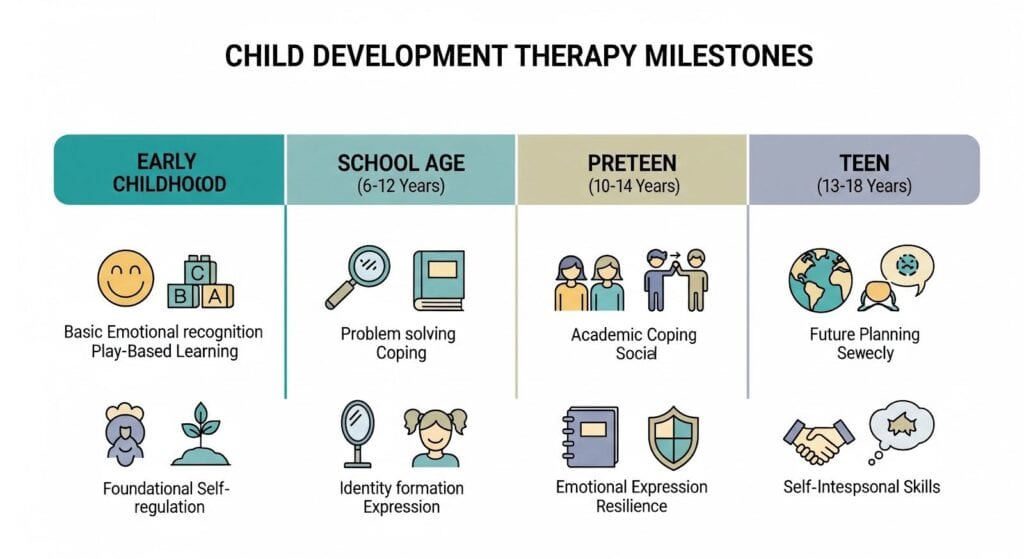
Key Developmental Milestones That Shape Therapy
Several milestones guide how therapy is structured:
| Developmental Stage/Age | Key Milestones/Focus |
| Early childhood (ages 4–8) | Learning to identify emotions, Developing basic coping skills, Building a sense of safety and trust |
| School‑age children (ages 8–11) | Growing emotional awareness, Navigating friendships and school pressures, Practicing problem‑solving |
| Adolescence (ages 12–17) | Identity development, Increased independence, Managing complex relationships |
Each stage brings new challenges—and new opportunities for growth. In clinical work with families, recognizing these transitions early often allows therapy to support children before small struggles grow into larger emotional patterns.
Read: How To Talk To Your Teen About Starting Therapy
How Therapy Approaches Differ for Children and Adolescents

Therapy methods change significantly as children grow, shifting from play-based exploration to conversation-based reflection and coping skills.
One of the most helpful ways to understand the difference between child and adolescent counseling is to look at how therapy sessions typically unfold.
| Category | Child Counseling | Adolescent Counseling |
| Typical Age | 4–10 | 11–17 |
| Session Style | Play‑based, creative activities | Conversation and reflection |
| Primary Focus | Emotional expression | Identity and coping |
| Parent Involvement | High | Moderate and collaborative |
| Common Concerns | Anxiety, behavior challenges | Depression, peer stress |
Both approaches are most effective when they align with the child’s developmental needs, communication style, and the family environment supporting them. Many families also explore related services like family therapy when emotional challenges affect the whole household.
What Happens During Child Counseling Sessions?
Child counseling often uses play, creativity, and structured activities to help children express emotions they may not yet have the words to explain.
Younger children often experience emotions deeply but struggle to put those feelings into words.
Because of this, therapy sessions frequently include activities such as:
- Play therapy
- Drawing or art activities
- Storytelling
- Games that teach coping skills
These activities aren’t just play. They create a safe space where children can process emotions, build confidence, and practice healthy ways to handle challenges.
How Parents Are Involved in Child Therapy
Parents play an essential role in child counseling. NIMH notes that effective psychotherapy for children often includes parent involvement, skill practice between sessions, and tracking progress over time.
Therapists often work closely with caregivers to:
- Share strategies that support emotional growth
- Reinforce coping skills at home
- Improve communication within the family
This collaborative approach helps children experience consistent support both inside and outside the therapy room.
Read: The Role Of Play Therapy In Child Mental Health
What Happens During Adolescent Counseling?
Adolescent counseling focuses more on conversation, emotional insight, and practical coping skills as teens develop independence and identity.
As children move into adolescence, therapy begins to look more like the counseling adults receive.
Teens often benefit from approaches such as those used in anxiety treatment and counseling or other teen-focused therapy programs. For many adolescents, cognitive behavioral therapy has strong evidence for anxiety and depression in youth. These may include:
- Cognitive Behavioral Therapy (CBT)
- Solution‑focused therapy
- Skill‑building for emotional regulation
- Conversations about relationships, stress, and identity
At this stage, therapy becomes a space where teens can explore their experiences, reflect on their emotions, and develop practical coping tools.
How Teen Therapy Balances Independence and Parent Support
One important shift in adolescent counseling involves confidentiality and independence.
Teens often need a private space where they can speak openly. At the same time, AACAP explains that confidentiality for adolescents must be balanced with caregiver involvement and state-specific consent rules. At the same time, parents remain an important part of the support system.
In practice, therapists typically balance this by:
- Maintaining appropriate confidentiality
- Providing parents with general updates
- Collaborating on goals that support the teen’s wellbeing
The Often‑Overlooked Stage: Counseling for Preteens (Ages 10–12)
Summary: The preteen years often sit between child and adolescent counseling. During this stage, therapy may combine play‑based activities with conversation as children develop greater emotional awareness and independence. Supporting preteens often involves helping them understand complex feelings while preparing for the challenges of adolescence.
In many families, the preteen years are when emotional changes become most noticeable.
Children may begin:
- questioning friendships
- experiencing stronger emotions
- seeking greater independence
In my experience working with families, this stage often benefits from a blended approach.
Sessions may include both creative activities and conversation, allowing preteens to express feelings while gradually building the skills they will rely on as teenagers.
Signs Your Child or Teen May Benefit From Counseling
Persistent changes in behavior, mood, or relationships can signal that a child or teen may benefit from counseling support.
Every child experiences emotional ups and downs. But sometimes additional support can make a meaningful difference.
Signs that counseling may help younger children include the kinds of warning signs highlighted by NIMH’s child and adolescent mental health resources:
- Frequent emotional outbursts
- Separation anxiety
- Difficulty adjusting to school
- Regression in behavior
Signs that adolescents may benefit from therapy include:
- Withdrawal from friends or family
- Persistent sadness or irritability
- Risk‑taking behavior
- Significant stress about school or relationships
How Parents Can Decide If Counseling Is the Right Step
If you’re unsure whether therapy is the right step, consider these questions:
- Has your child’s behavior changed significantly?
- Are emotional challenges affecting school or friendships?
- Has the concern lasted several weeks or longer?
- Does your child seem overwhelmed by emotions?
- Would an outside perspective be helpful?
Many parents worry they might be overreacting. In my experience working with families, the opposite is often true—parents usually wait until a challenge has already been affecting their child for some time. Therapy can simply provide a supportive space where children and teens learn healthy ways to manage life’s challenges before those struggles become overwhelming.
If you’re unsure what type of support may help your child, speaking with a licensed therapist can often bring clarity. Many parents begin by scheduling an introductory consultation through our online counseling and telehealth services.
How Therapists Decide Between Child Counseling and Adolescent Counseling
Therapists look at developmental readiness, communication style, and emotional maturity when choosing the most effective therapy approach.
Therapists don’t rely on age alone when deciding how therapy should look.
Instead, they consider factors such as:
- Communication style
- Emotional maturity
- Family dynamics
- The challenges the child is experiencing
In my practice, I often see children who are developmentally ready for aspects of adolescent counseling while still benefiting from the creative tools used in child therapy. A flexible approach allows therapy to grow alongside the young person.
What Parents Can Expect When Starting Therapy
The first stage of therapy focuses on understanding the child’s experiences and building a safe, supportive relationship with the therapist.
Beginning therapy can feel unfamiliar, but the process is usually simple and supportive.
The first sessions often include:
- An initial conversation with parents
- Time for the child or teen to meet the therapist
- Discussion of goals and concerns
Over time, therapy becomes a space where young people can explore emotions, practice coping strategies, and develop resilience. At our Savannah practice, we often see children grow more confident simply because they finally have language for feelings they previously didn’t understand.
At Waters Edge Counseling in Savannah, our goal is always to create an environment where children and teens feel safe, supported, and understood while also giving parents practical tools to support emotional growth at home.
Frequently Asked Questions About Child and Adolescent Counseling
These are some of the most common questions parents ask when considering counseling for their child or teenager.
Parents often reach this point in the conversation with very practical questions about how therapy works. These answers reflect the questions our therapists hear most often from families considering counseling.
What age is considered adolescent counseling?
Adolescent counseling typically begins around age 11 or 12 and continues through the teenage years. The transition depends less on age alone and more on developmental readiness and communication abilities.
Can parents participate in therapy sessions?
Yes. Parent involvement is often an important part of therapy, especially for younger children. Therapists work with families to determine the most supportive level of participation.
How long does therapy usually last?
The length of therapy varies depending on the child’s needs and goals. Some families benefit from short‑term support, while others continue therapy over a longer period.
Is play therapy effective for anxiety?
Yes. Play therapy can be very effective for helping younger children express and manage anxiety because it allows them to communicate feelings in developmentally appropriate ways, and the Society of Clinical Child and Adolescent Psychology provides guidance on evidence-based therapies for youth.
How do I know if my child needs counseling?
If emotional or behavioral challenges are affecting your child’s daily life, relationships, or school experience, speaking with a therapist can help determine what support may be beneficial.
If your child or teen is struggling, the team at Waters Edge Counseling offers compassionate therapy for children and adolescents in Savannah and throughout Georgia via telehealth. Families can schedule a counseling appointment online or reach out through our contact a therapist page as a supportive next step toward helping your child feel more confident and resilient.
About the Author
Whitney Owens, LPC is the founder of Waters Edge Counseling and a licensed professional counselor with more than a decade of experience supporting children, adolescents, and families. Her work focuses on compassionate, developmentally informed therapy that helps young people build emotional resilience while supporting parents with practical tools. Learn more about her experience and clinical approach on her full professional bio.
Medical Disclaimer
This article is provided for informational and educational purposes only and should not be considered a substitute for professional medical or mental health advice, diagnosis, or treatment. Always seek the advice of a qualified healthcare provider or licensed mental health professional with any questions you may have regarding a medical or mental health condition.
Crisis Support
If you or someone you know is experiencing a mental health crisis, immediate help is available:
- Call or text 988 – Suicide & Crisis Lifeline
- Call 911 – Emergency services
- Crisis Text Line: Text HOME to 741741 to connect with a trained crisis counselor
If you believe someone is in immediate danger, contact emergency services right away.