


By Water’s Edge Counseling · Reviewed by Whitney Owens, LPC · Savannah & Wilmington Island, GA · Last reviewed: March 2026
Quick Answer: What Is Play Therapy?
Play therapy is a structured, evidence-based form of psychotherapy in which a trained clinician uses play — the natural language of children — to help kids aged 3–12 process emotions, work through trauma, and develop healthy coping skills. At Water’s Edge Counseling in Savannah, GA, our therapists use individualized, play-based techniques to help children navigate anxiety, behavioral challenges, family transitions, grief, and more. In-person sessions are available at our Savannah and Wilmington Island offices, with telehealth available across Georgia.
If your child has been acting out, withdrawing from friends, struggling in school, or reacting strongly to a big life change — a divorce, a new sibling, a loss, a move — you may have been advised to consider therapy. But traditional talk therapy often falls short for younger children. Kids simply don’t have the verbal or emotional vocabulary adults rely on to describe what’s happening inside them.
That’s where play therapy comes in. If you’re a parent in Savannah or on Wilmington Island, this guide will help you understand what play therapy is, how it works, and how to know if it’s the right next step for your child.
What Is Play Therapy — and How Does It Work?
Play therapy is not free play or childcare. It is a clinically guided intervention in which a licensed therapist deliberately uses toys, art materials, sand trays, puppets, and role-play to create a bridge between a child’s inner world and the therapeutic process.
The Association for Play Therapy defines it as the systematic use of a theoretical model in which trained play therapists use the therapeutic powers of play to help children prevent or resolve psychosocial difficulties and achieve optimal growth and development.
In a typical session at Water’s Edge Counseling, your child enters a warm, welcoming space with carefully selected materials. The therapist observes, follows the child’s lead, and over time introduces guided activities tailored to their needs. Most families begin to see meaningful shifts in behavior and emotional regulation within 8–20 sessions. Our child and teen counseling team is specifically trained to meet children where they are — not where we expect them to be.
Child-Centered vs. Directive Play Therapy
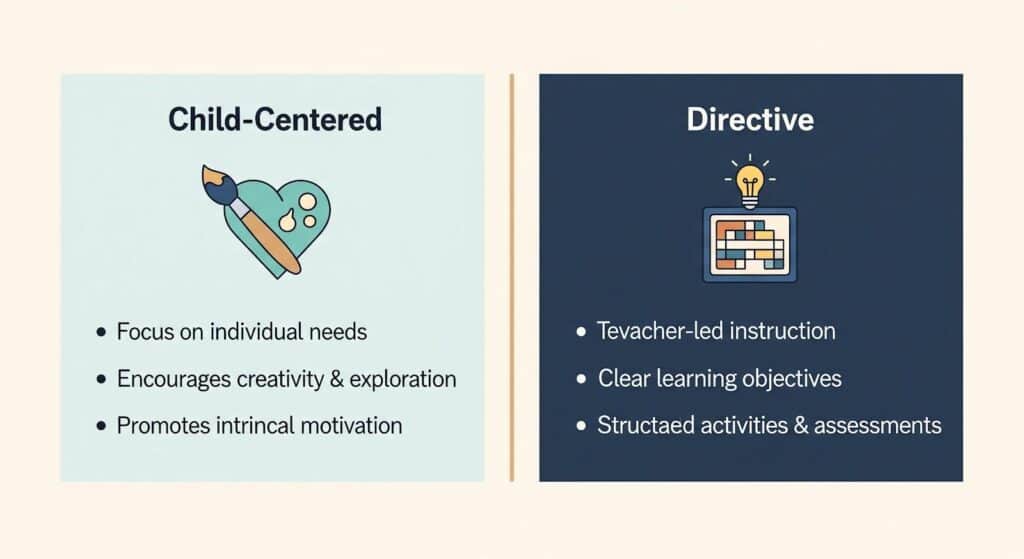
Child-Centered Play Therapy (CCPT): The therapist follows the child’s lead, offering unconditional positive regard. This non-directive approach is particularly effective for children who have experienced trauma, emotional neglect, or attachment disruptions.
Directive Play Therapy: The therapist introduces specific activities with clear therapeutic goals — for example, a sand tray scenario to process a family conflict, or puppet play to rehearse social skills. This approach is commonly used with children experiencing ADHD, social anxiety, or specific behavioral patterns.
Our therapists use an integrative approach, drawing from both models based on what each individual child needs most.
Read: Child vs Adolescent Therapy
What Conditions Does Play Therapy Address?
Play therapy is not limited to one diagnosis. Our clinicians work with children experiencing a wide range of challenges. You can also explore our dedicated pages on child counseling and counseling for teenagers for more detail on how we approach different age groups.
- Anxiety, excessive worry, and separation anxiety
- School refusal and academic stress
- ADHD and impulse control difficulties
- Trauma — including abuse, neglect, or witnessing violence
- Grief and bereavement — loss of a parent, grandparent, or pet
- Behavioral concerns at home or school
- Depression and emotional withdrawal
- Adjustment difficulties related to divorce, relocation, or new siblings
- Social skills challenges and peer relationship difficulties
- Low self-esteem and identity-related concerns
📞 Concerned about your child right now? Call Water’s Edge Counseling at 912-319-5552 — our team will help match your child with the right therapist, often within the same week.
Frequently Asked Questions About Play Therapy in Savannah
How do I know if my child needs play therapy?
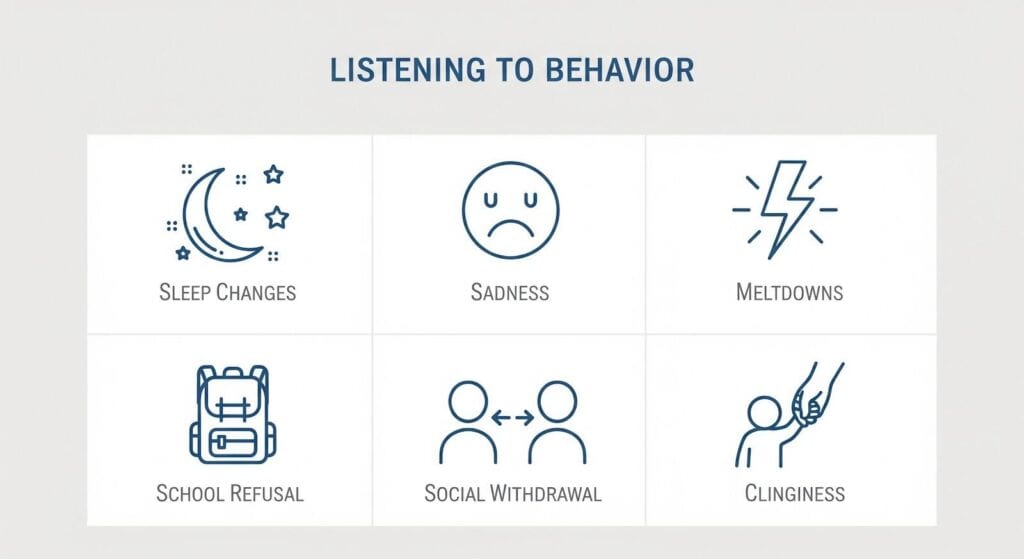
Children rarely say “I need help.” Instead, they show it through behavior. Watch for these signals:
- ✓ Sudden changes in sleep, appetite, or daily behavior
- ✓ Regressed behaviors such as bedwetting after being potty-trained
- ✓ Persistent sadness, tearfulness, or emotional numbness
- ✓ Explosive anger, aggression, or meltdowns out of proportion to the situation
- ✓ Excessive clinginess or fear of separation from caregivers
- ✓ Difficulty making or keeping friends
- ✓ Declining grades or persistent school avoidance
These behaviors are not signs of a “bad kid.” They’re signals that your child needs support processing something beyond their current emotional toolkit — and that’s exactly what therapy is for.
⚠️ Don’t wait to get help. Children rarely grow out of anxiety, behavioral struggles, or the effects of trauma without support. The earlier a child receives care, the better the long-term outcomes for their emotional health, relationships, and academic performance.
How long does play therapy take?
Most children attend weekly sessions of 45–50 minutes. Total duration varies by presenting concern and progress, but many families notice meaningful changes within 12–20 sessions. Children with complex trauma may benefit from longer-term support.
Will I be involved as a parent?
Yes — and we consider parent involvement essential. At Water’s Edge Counseling, you’ll receive regular feedback from your child’s therapist, guidance on reinforcing coping skills at home, and support navigating difficult conversations with your child. Research consistently shows parental involvement is one of the strongest predictors of positive outcomes. You can also explore our parenting support counseling services if you’d like dedicated support alongside your child’s therapy.
Do you accept insurance for play therapy?
Water’s Edge Counseling provides personalized care outside the limitations of insurance-based models. We are not in-network with insurance carriers, but we can provide a superbill you may submit to your insurer for possible out-of-network reimbursement. Contact us and we’ll help clarify what that looks like for your family.
What ages does play therapy serve?
Play therapy is most effective for children ages 3 to 12. Adolescents may still benefit from play-based elements but typically engage more readily with verbal, insight-oriented approaches. Our teen counseling services are tailored specifically for that transition, available at both our Savannah and Wilmington Island locations.
Can therapy help if my child has experienced trauma?
Yes. Trauma-informed play therapy is one of the most effective tools available for children who have experienced abuse, neglect, sudden loss, or household instability. We also offer EMDR therapy for older children and teens ready for a more structured trauma-processing approach. Our therapists will help you determine which method is the best fit based on your child’s age, presentation, and history.
Why Savannah Families Choose Water’s Edge Counseling
Founded in 2014 by Whitney Owens, LPC, Water’s Edge Counseling was built on the belief that quality therapy should feel personal, not clinical. Our offices are designed to feel welcoming — not like a waiting room. Therapists are matched to each client based on presenting needs, not just availability.
We serve children, teens, adults, and families at two convenient locations: our Savannah office and our Wilmington Island office. Online therapy is also available for families across Georgia who prefer telehealth or need more scheduling flexibility.
Unlike high-volume, insurance-driven practices, we intentionally keep caseloads manageable so your child receives deep, focused attention. To see who’s on our team, visit our counseling team page — each therapist profile includes their specialties, so you can find the right fit before you even call.
Taking the First Step — It’s Simpler Than You Think
You don’t need a referral from a pediatrician to get started, though many families begin that conversation with their child’s doctor. Our team will walk you through a brief intake to understand your child’s needs and determine whether play therapy — or another evidence-based approach — is the best fit.
The earlier a child receives support, the better the long-term outcomes. Therapeutic intervention at a young age can produce lasting improvements in emotional regulation, self-esteem, social development, and school performance.
Call us at 912-319-5552 and a team member will discuss your child’s needs, answer your questions, and match you with the right therapist — often within the same week.
Ready to Take the First Step?
Our therapists in Savannah and on Wilmington Island specialize in child and teen counseling — matched to your child’s specific needs, not a one-size-fits-all protocol. Telehealth also available across Georgia.
Call or text anytime — we typically respond same day
Request an Appointment Online →
This article was written by the clinical team at Water’s Edge Counseling under the editorial direction of founder Whitney Owens, LPC. Whitney has been a licensed therapist in Georgia since 2009 and founded Water’s Edge Counseling in 2014. She holds a Master in Professional Counseling from Richmont Graduate University, is a member of the American Counseling Association, and brings deep expertise in anxiety, depression, trauma, identity, and adolescent care.
watersedgecounseling.com · Savannah Office · Wilmington Island Office · Meet Our Team