


By Water’s Edge Counseling · Reviewed by Whitney Owens, LPC · Savannah & Wilmington Island, GA · Last reviewed: March 2026
Starting a conversation about therapy with your teenager can feel daunting. You want to help, but you also don’t want to push them away. You might worry they’ll shut down, get defensive, or feel like something is “wrong” with them. Those fears are completely normal — and they don’t have to stop you from having one of the most important conversations of their life.
According to 2023 data from the National Survey of Children’s Health, more than 1 in 5 adolescents ages 12–17 has a diagnosed mental or behavioral health condition — yet many never receive care. The gap isn’t a lack of need. Often, it starts with a conversation that never happened.
At Water’s Edge Counseling, we’ve worked with teenagers and their families in Savannah and across Georgia for years through our child and teen counseling services. We’ve seen firsthand how the right conversation, at the right moment, can open a door that changes everything. Here are six practical ways to open that door — and what to do if your teen pushes back.
Why the “How” Matters as Much as the “What”
Teenagers are finely tuned to tone and motive. If this conversation feels like a lecture, an accusation, or a last resort, they’ll hear that — even if your words are perfectly chosen. Research from the JED Foundation finds that teens today worry less about shame around mental health — but are highly attuned to whether adults will listen empathetically or jump immediately to problem-solving. The goal isn’t to convince them they’re broken. The goal is to let them know you see them, you’re with them, and you’re not going anywhere.
Coming from that place changes everything about how this conversation lands.
1. Choose the Right Moment
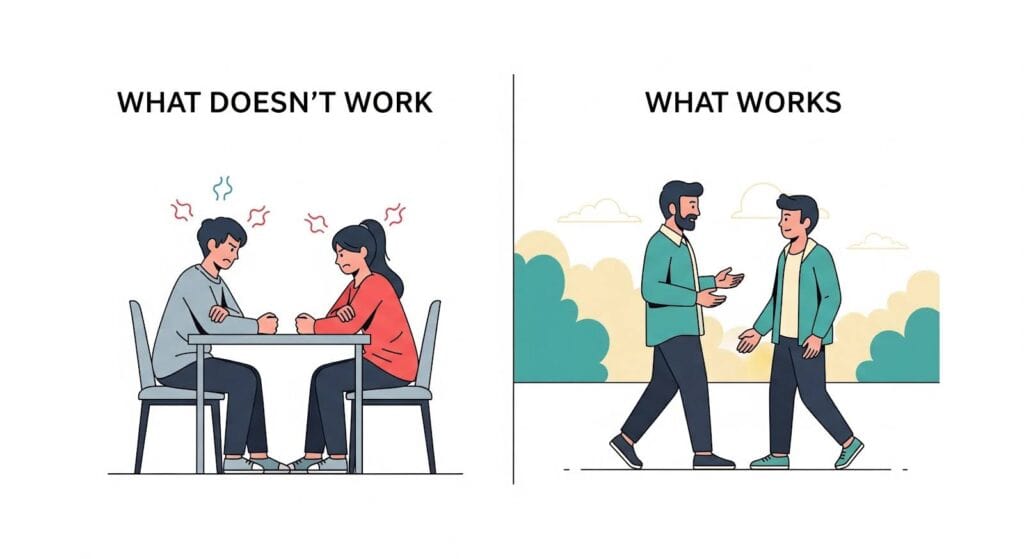
Timing matters. A tense evening after a hard day at school is rarely the right window. Instead, look for a low-pressure moment — maybe a drive somewhere, a walk, or a quiet stretch at home when nothing else is competing for attention. Side-by-side conversations (rather than face-to-face) can actually feel less confrontational for teens, making it easier for them to open up — a dynamic supported by adolescent communication research and echoed by the Better Health Channel’s guidance on talking with teenagers.
2. Lead With What You’ve Noticed, Not What’s Wrong
There’s a big difference between “I think you need therapy” and “I’ve noticed you seem really weighed down lately, and I want to make sure you have support.”
The first puts them on the defensive. The second opens a door.
Try to name specific, observable things without labeling or diagnosing. “You haven’t been sleeping well,” “You seem frustrated a lot,” or “You’ve pulled back from things you used to love” are all ways to say I see you without saying something is wrong with you. If anxiety seems to be at the root of what you’re observing, naming that gently can also help your teen feel understood rather than scrutinized.
3. Normalize Therapy — For Everyone
One of the biggest hurdles teenagers face is the belief that therapy is for people who are seriously struggling or “crazy.” Peer-reviewed research published in Focus (American Psychiatric Association) consistently identifies stigma and negative beliefs about mental health services as the most prominent barriers to teens seeking help. It helps to challenge that directly and honestly.
You might share that therapy is something many people use — not just in crisis, but as a tool for understanding themselves better, managing stress, and building skills for life. If you’ve had your own experience with counseling, this can be a powerful moment to share it. Vulnerability from a parent goes a long way — and research published in PMC (National Institutes of Health) shows that a parent’s own attitudes toward mental health are one of the strongest predictors of whether a teen will ultimately seek help. Your openness isn’t just modeling — it actively lowers the barrier for them.
4. Give Them Some Control
Teens often resist therapy because it feels like something being done to them, not for them. One of the most effective things you can do is involve them in the process.
Let them have input on the therapist. Let them know what to expect from a first session. Make it clear that they don’t have to commit to anything long-term before they’ve even tried it. Giving them ownership over this decision — even in small ways — dramatically increases the chance they’ll actually engage. If you’d also benefit from some guidance navigating this phase, our parenting support counseling is a resource many Savannah families find helpful alongside their teen’s individual work.
5. Be Honest About What Therapy Is (and Isn’t)
Some teens imagine therapy as a rigid, clinical experience where someone analyzes their every word. It’s worth dispelling that image.
A good therapist builds a genuine relationship with your teen. Sessions are a space to talk through what’s actually on their mind — stress about school, friendships, identity, family dynamics, anxiety, or just the general weight of growing up. It’s not about being “fixed.” It’s about having a safe place to figure things out. You can learn more about what our counseling for teenagers looks like at Water’s Edge.
6. Keep the Door Open After the Conversation
Even if the first conversation doesn’t go the way you hoped, don’t treat it as a closed chapter. A teenager who initially resists may come around in a week, a month, or after a particularly hard day. Let them know the option is there and that your support isn’t conditional on their response.
Sometimes, just knowing you’re willing to revisit it without pressure is enough to make them feel safe enough to say yes later.
Frequently Asked Questions
How do I talk to my teenager about going to therapy? Start with empathy, not urgency. Choose a calm, low-pressure moment and lead with what you’ve observed — not a diagnosis or demand. Normalize therapy as a healthy tool, give your teen some control over the process, and keep the conversation open-ended. The goal is connection, not compliance.
What do I do if my teen refuses therapy? Don’t force the issue in the moment. Forcing a teenager into therapy rarely works and can make them more resistant. Instead, keep the conversation open, address the specific concerns they raise (privacy, stigma, not knowing what to expect), and revisit the topic gently over time. If anger or behavioral escalation is part of what you’re seeing, our post on managing teen anger has practical strategies that may help in the meantime. If there are safety concerns, seek professional guidance immediately.
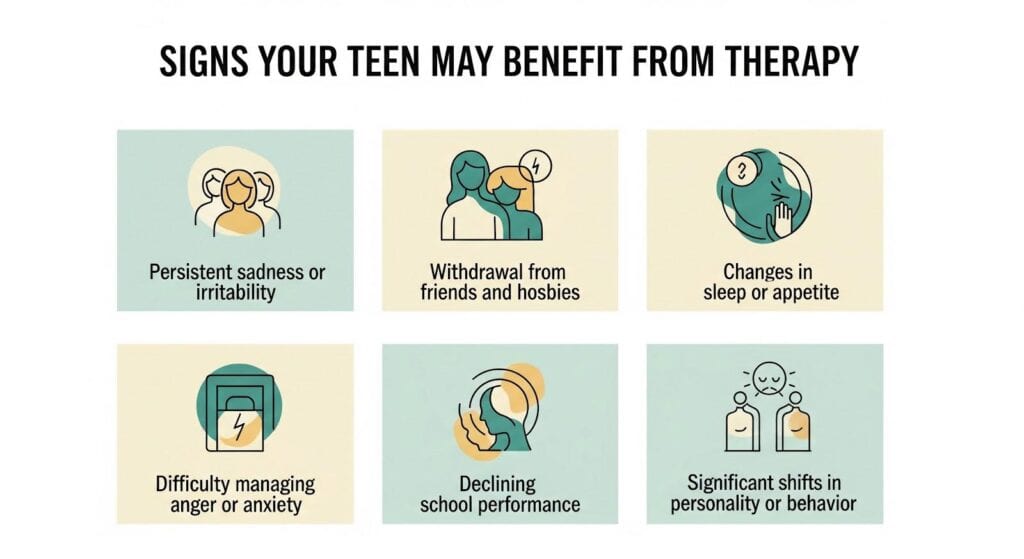
How do I know if my teenager needs therapy? Signs that therapy could help include: persistent sadness or irritability, withdrawal from friends and activities they used to enjoy, changes in sleep or appetite, difficulty managing anxiety or anger, declining school performance, or anything that feels like a significant shift from who your teen normally is — these align with the warning indicators outlined by the National Institute of Mental Health (NIMH). You don’t have to wait for a crisis — therapy is valuable at any stage. If school stress is a primary driver, our school stress counseling page speaks directly to that. And if scheduling or location is a concern, online counseling is available throughout Georgia.
What should I tell my teen therapy will be like? Be honest and reassuring. Tell them that a first session is mostly a chance to meet the therapist and talk about what’s going on in their life. There’s no pressure to share everything right away. A good therapist will work at their pace, build trust gradually, and keep what they share confidential. According to the American Counseling Association, session content is kept private unless there is a genuine threat of harm to the teen or others — a standard that applies across licensed counselors. It’s worth explaining this clearly to your teen upfront, as confidentiality is one of the key factors that helps teens feel safe enough to open up.
Can I go to therapy with my teenager? In some cases, yes — especially in family or parenting sessions. However, it’s often valuable for teens to also have individual time with their therapist where they can speak freely. Your therapist can help you find the right balance.
You’re Already Doing Something Right
If you’ve read this far, it’s because you care deeply about your teenager’s wellbeing. That matters more than finding the perfect words. The willingness to start this conversation — even imperfectly — communicates something your teen needs to hear: that you’re paying attention, and that you’re in their corner.
If you’re ready to take the next step, our team at Water’s Edge Counseling would love to talk with you about how we can support your family. We work with teenagers and young adults in Savannah, Wilmington Island, and throughout Georgia via telehealth — you can meet our counseling team here. Reaching out is simple — and it might be the first step toward things getting a little lighter for both of you.
Water’s Edge Counseling — Savannah, GA 📞 912-319-5552 Schedule a Consultation