


This article was written by the clinical team at Water’s Edge Counseling.
When you are standing at the edge of burnout or feeling the constant pull of a racing heart, “trying to relax” feels like an impossible task. You aren’t looking for a quick fix; you are looking for a Safe Harbor—a place where your healing is grounded in science and guided by empathy.
The Bottom Line
Evidence-based anxiety treatment involves clinically validated protocols—primarily CBT and EMDR—that produce measurable symptom reduction. Unlike traditional talk therapy, these methods prioritize re-wiring cognitive patterns and processing trauma. Clinical outcomes show that most individuals experience significant relief within 12 to 20 sessions when using a focused, unconstrained treatment plan.
In my clinical experience, I often see high-achievers and dedicated parents who feel like they are treading water. They know they need help, but they want to know that the time and energy they invest in therapy will lead to real, measurable Restoration.
What is Evidence-Based Anxiety Treatment?
Evidence-based care isn’t just a clinical buzzword; it is a Promise of Reliability. It means that the tools we use in our Savannah and Wilmington Island offices have been rigorously tested in clinical trials and proven to work for people just like you.
This clinical rigor ensures that your time in the therapist’s office is spent on strategies that have successfully helped thousands of others navigate similar paths of anxiety and distress.
The “High-Resolution” Recovery: Why Clinical Protocols Matter
Many traditional therapy models are constrained by insurance-mandated “session limits” or rigid diagnostic requirements. At Water’s Edge Counseling, we intentionally operate as a Private-Pay Sanctuary because we believe your recovery shouldn’t be dictated by a third-party checklist.
Our clinical data shows that when we remove these artificial barriers, we can offer what I call High-Resolution Recovery. Instead of a 6-session “band-aid,” our team of 17+ licensed clinicians can apply the full, unconstrained evidence-based protocols.
This allows us to honor your unique story while ensuring we meet the clinical thresholds required for long-term emotional resilience.
Cognitive Behavioral Therapy (CBT): The Gold Standard for Anxiety
If anxiety is a storm of “what-ifs,” CBT is the compass that helps you find your way back to land. According to the American Psychological Association, CBT is the most widely researched and successful treatment for generalized anxiety, panic disorders, and social phobia.
What to Expect in an Evidence-Based CBT Session:
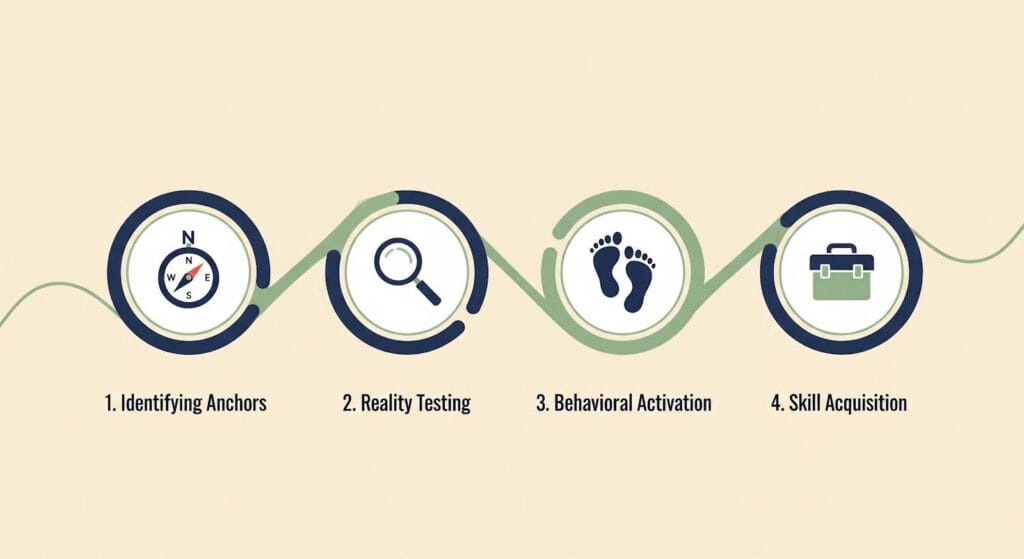
- Identifying Anchors: We pinpoint the specific thought patterns (cognitive distortions) that trigger your anxiety.
- Reality Testing: We collaboratively look at the evidence for these thoughts, separating fear from fact.
- Behavioral Activation: We create small, manageable risks that help you prove to your nervous system that you are safe.
- Skill Acquisition: You walk away with tangible tools to use the next time you feel the tide of anxiety rising.
“CBT isn’t about positive thinking; it’s about Accurate Thinking. It’s giving you the clinical maps to navigate your own mind.”
Ready to start? Connect with our team to find a CBT specialist in Savannah.
EMDR Therapy: Processing the Roots of Trauma-Based Anxiety
Sometimes, anxiety isn’t just about what you are thinking; it’s about what your body is Remembering. For those whose anxiety stems from past trauma or distressing life events, EMDR Therapy offers a profound and rapid path to peace.
Validated by organizations like EMDRIA, this method uses bilateral stimulation to help your brain reprocess “stuck” memories. In our coastal offices, we see this lead to a Renewal of the self, where the memory remains, but the “sting” of the anxiety is washed away.
Not sure which path fits your story? Contact us directly to see who on our team specializes in your specific needs.
CBT vs. EMDR: Which Path is Right for You?
Choosing a modality is a collaborative process. Use the table below to see which approach aligns with your current journey:
| Feature | Cognitive Behavioral Therapy (CBT) | EMDR Therapy |
| Primary Focus | Present thought patterns and behaviors | Past trauma and stored emotional triggers |
| Typical Goal | Managing symptoms and re-framing “what-ifs” | Desensitizing painful memories |
| Ideal For | General anxiety and perfectionism | PTSD and acute distress |
| Timeline | Structured (12-20 sessions) | Variable breakthroughs |
Beyond Talk Therapy: Somatic Integration and the “Body Budget”
Much like the tides of the Tybee coast, our nervous systems have a natural rhythm. Evidence-based care now recognizes that we cannot heal the mind while ignoring the physical sensations stored within the body.
At Water’s Edge, we integrate Somatic Awareness into our individual counseling protocols. This involves managing what neuroscientists call the “Body Budget” or Allostatic Load.
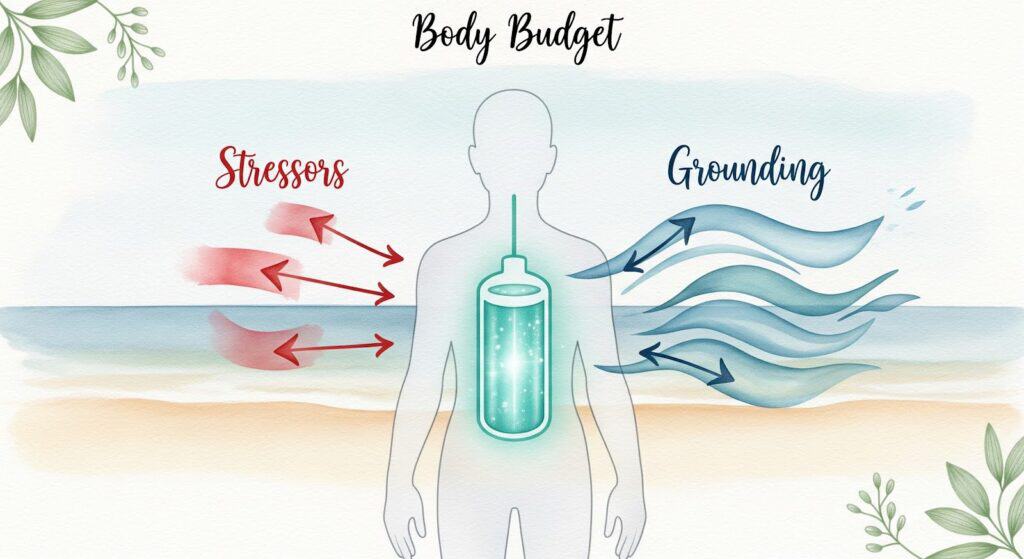
By recognizing when your nervous system is overdrawn, you can use grounding techniques to restore balance. This Whole-Person approach is the differentiator in modern mental health.
Read: The Clinical Integration of Faith and Psychology: A Professional Guide to Christian Counseling
Measuring Your Outcomes: How We Quantify Healing
We believe in Integrity-First care. This means we don’t just ask “how do you feel?”—we use validated clinical scales, such as the GAD-7, to track your progress in our anxiety treatment programs.
Research shows that using these standardized measures leads to significantly better outcomes for clients. When we see those numbers drop, it provides you with the Clarity that the work is working.
Finding Your Safe Harbor in Savannah & Wilmington Island
You don’t have to stand on the edge alone. Whether you are navigating the pressures of a career in Savannah or seeking stability for your family on Wilmington Island, our team is here to walk alongside you.
Ready to move from the edge to renewal?
The most effective way to begin is to reach out via our contact page to start the conversation. Our preferred method is for you to Call 912-319-5552 To Schedule your intake session.
This personal connection allows us to match you with a specialist who understands your unique anxiety triggers and the specific evidence-based method right for your journey toward healing.
Frequently Asked Questions
Does insurance cover evidence-based anxiety therapy?
While we are a private-pay practice to ensure quality, we can provide a “Superbill” for you to submit to your insurance for potential out-of-network reimbursement.
How do I know if I need EMDR or CBT?
During your intake, your therapist will help you decide. Generally, if anxiety feels “stuck” in your past, EMDR is preferred. If it’s focused on daily ruminations, CBT is the gold standard.
How long does it take to see results?
Most of our clients report a noticeable shift within the first 4 to 6 sessions, with significant outcomes typically occurring between 12 and 20 sessions.
Your Journey to Renewal Starts Now.
Don’t let anxiety or the tension between faith and clinical care hold you back any longer. Our licensed, compassionate team is ready to guide you to your Safe Harbor.
Reach Out or Call 912-319-5552 To Schedule your confidential intake today.
About the Author
This article was written by the clinical team at Water’s Edge Counseling. As a boutique group practice with locations in Savannah and Wilmington Island, Georgia, our 17+ licensed clinicians are dedicated to providing high-resolution, evidence-based care that honors the unique story and clinical needs of every individual we serve.
Medical Disclaimer
The information provided in this article is for educational and informational purposes only and is not intended as medical or mental health advice. Always seek the advice of your physician or other qualified health provider with any questions you may have regarding a medical condition or mental health concern. If you are experiencing a mental health crisis or emergency, please call 911 or the Suicide & Crisis Lifeline at 988 immediately.